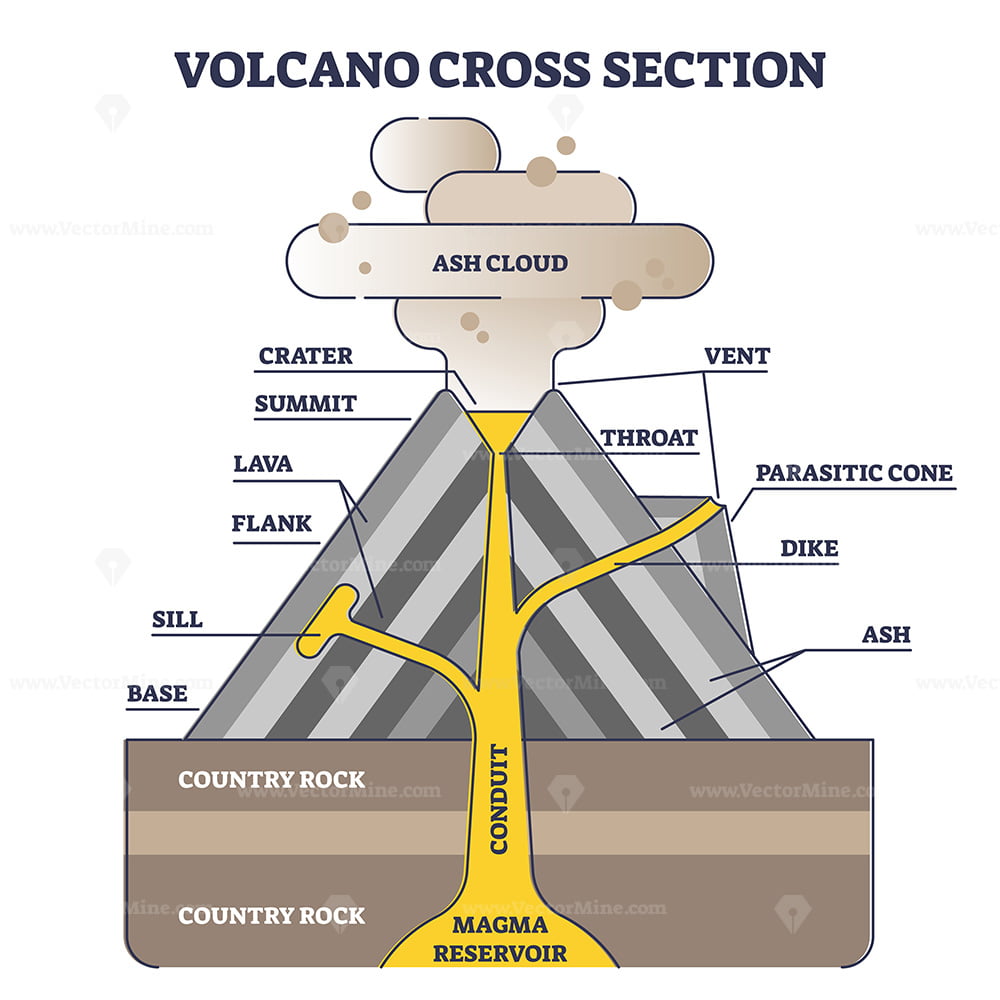
Cross Section of a Volcano – Anatomy Vector Illustration
€7.99
- Buy once, own it forever
- Something wrong? We'll fix it or refund it
This product includes:

1. Editable Vector .AI file
Compatibility:
Adobe Illustrator CC
Includes Editable Text Font SuezOne (Under Free Open Font License)

2. Editable Vector .EPS-10 file
Compatibility:
Most Vector Editing Software

3. High-resolution JPG image
4000 x 4000 px

License terms in short:
Use for everything except reselling item itself.
Read a full license here
Explore the intricate world beneath the Earth’s surface with our detailed cross section of a volcano. This anatomy vector illustration provides a clear and visually appealing way to understand the inner workings of these geological powerhouses. From the magma chamber deep below to the ash cloud high above, this diagram showcases every essential element of a volcano. Whether you’re an educator, a student, or simply curious about the natural world, this illustration offers valuable insights into the fascinating processes that shape our planet.
Understanding the Volcano Structure
A volcano’s structure is a complex interplay of geological forces and molten rock. The volcano cross section diagram unveils this intricate anatomy, displaying the magma chamber where molten rock accumulates. This reservoir feeds the central conduit, the main vent through which lava and gas ascend during a volcanic eruption. The erupted material builds the volcano’s cone-shaped structure. Understanding these components is crucial for comprehending the dynamics of volcanic activity and the different types of volcanoes that exist.
What is a Cross Section of a Volcano?
A cross section of a volcano is essentially a cutaway view, offering a glimpse into the internal structure of the volcanic mountain. This diagrammatic representation reveals the arrangement of various components, such as the magma chamber, conduit, and different layers of volcanic rock and ash. A volcano cross section is an invaluable tool for visualizing the pathways of magma and gas during an eruption. It helps illustrate the geological processes that form and shape volcanoes over time, and their relation to the structure of the Earth.
Key Components of a Volcano Cross Section
The anatomy of a volcano, as depicted in a cross section, showcases several key components. Understanding these components is vital for grasping the dynamics of a volcanic eruption and the formation of different volcano types.
| Component | Description |
|---|---|
| Magma Chamber | A reservoir of molten rock that lies deep beneath the surface |
| Conduit (Vent) | Magma rises through it to erupt at the crater |
Distinct features like the lava dome, parasitic cone, and layers of ash and lava flow are also visible with the help of a volcano cross section diagram.
Importance of Cross Section Diagrams in Education
Cross section diagrams of volcanoes are invaluable educational tools for teaching geology and Earth science. These illustrations provide a clear and accessible way for students to visualize the internal structure of a volcano. By examining a cross section of a volcano, learners can easily identify key features such as the magma chamber, conduit, crater, and layers of ash and lava. This visual aid enhances their understanding of volcanic eruptions and the forces that shape our planet and also shows different types of volcanoes, like composite or shield volcanoes.
Types of Volcanoes and Their Features
Volcanoes are not all created equal; they come in various shapes and sizes, each with unique characteristics determined by their formation process and eruption style. A volcano cross section diagram helps to visualize these differences, highlighting the distinct internal structure of each volcano type. Studying the anatomy of different volcanoes reveals how their internal components influence their eruptive behavior, from gentle lava flows to explosive ash eruptions. Understanding these variations is crucial for comprehending the complex world of volcanology and the structure of the Earth. Stock photos and illustrations can also demonstrate those differences.
Shield Volcanoes: Characteristics and Examples
Shield volcanoes are known for their distinctive shape, resembling a warrior’s shield. This shape is a direct result of how they are formed. Specifically, their formation involves:
- The eruption of highly fluid lava, which spreads easily.
- A central vent or fissure through which lava emerges.
These features, combined with their composition primarily of lava flows, distinguish them from other types of volcanoes, like composite volcanoes.
Cinder Cone Volcanoes: Formation and Structure
Cinder cone volcanoes are the simplest type of volcano. They are formed from the accumulation of various materials, including:
- Volcanic ash
- Cinders and other pyroclastic material
These materials accumulate around a single vent, creating a cone structure that is typically steep-sided and symmetrical. A volcano cross section of a cinder cone reveals a relatively small magma chamber and a central vent. These volcanoes are often associated with more extensive volcanic fields or found on the flanks of larger volcanoes. The material of the cone is ejected during a volcanic eruption.
Composite Volcanoes: Anatomy and Eruption Patterns
Composite volcanoes, also known as stratovolcanoes, are large, symmetrical cones built of alternating layers of lava flow, volcanic ash, and other volcanic debris. Their anatomy is complex, featuring a network of conduits that feed the central vent and flank eruptions. Composite volcanoes are known for their explosive eruptions, which can produce devastating ash clouds, pyroclastic flows, and lahars. A composite volcano cross section displays the magma chamber. Royalty-free photos provide visual examples. The structure of the Earth shows how they formed.
Detailed Anatomy of a Volcano
Central Conduit and Magma Reservoir
The central conduit serves as the primary pathway for magma to ascend from the deep magma reservoir towards the Earth’s surface during a volcanic eruption. This conduit is a critical element in the cross section of a volcano, facilitating the movement of molten rock and volcanic gases. The magma chamber, a vast reservoir of magma, is located deep within the Earth’s crust. The interplay between the magma chamber and central conduit dictates the intensity and nature of a volcanic eruption, making them essential components of volcano anatomy. Various types of volcanoes have differently shaped magma reservoirs.
Summit Crater: The Eruption Site
The summit crater marks the vent of the volcano, the focal point where a volcanic eruption occurs, releasing lava, ash, and gas into the atmosphere. This crater is typically a bowl-shaped depression at the volcano’s peak, formed by explosive activity or the collapse of the vent. The cross section of a volcano clearly illustrates the summit crater’s connection to the central conduit. During an eruption, the crater serves as the exit point for molten rock and volcanic gases, influencing the shape and structure of the surrounding volcano cone. Erupting volcano stock photos show ash being ejected from the crater.
Flank and Base Features in Volcano Anatomy
The flanks and base of a volcano reveal additional features in volcano anatomy. The volcano flanks, or sides, may exhibit fissures, parasitic cones, and lava domes formed by past eruptions. The base of the volcano intersects with the surrounding terrain, revealing the underlying geological context and the volcano’s relationship to the structure of the Earth. The cross section of a volcano showcases the layering of lava flows and volcanic ash on the volcano flanks, providing valuable insights into the volcano’s eruptive history and the forces that shaped its structure. The composite volcano is a good example.